
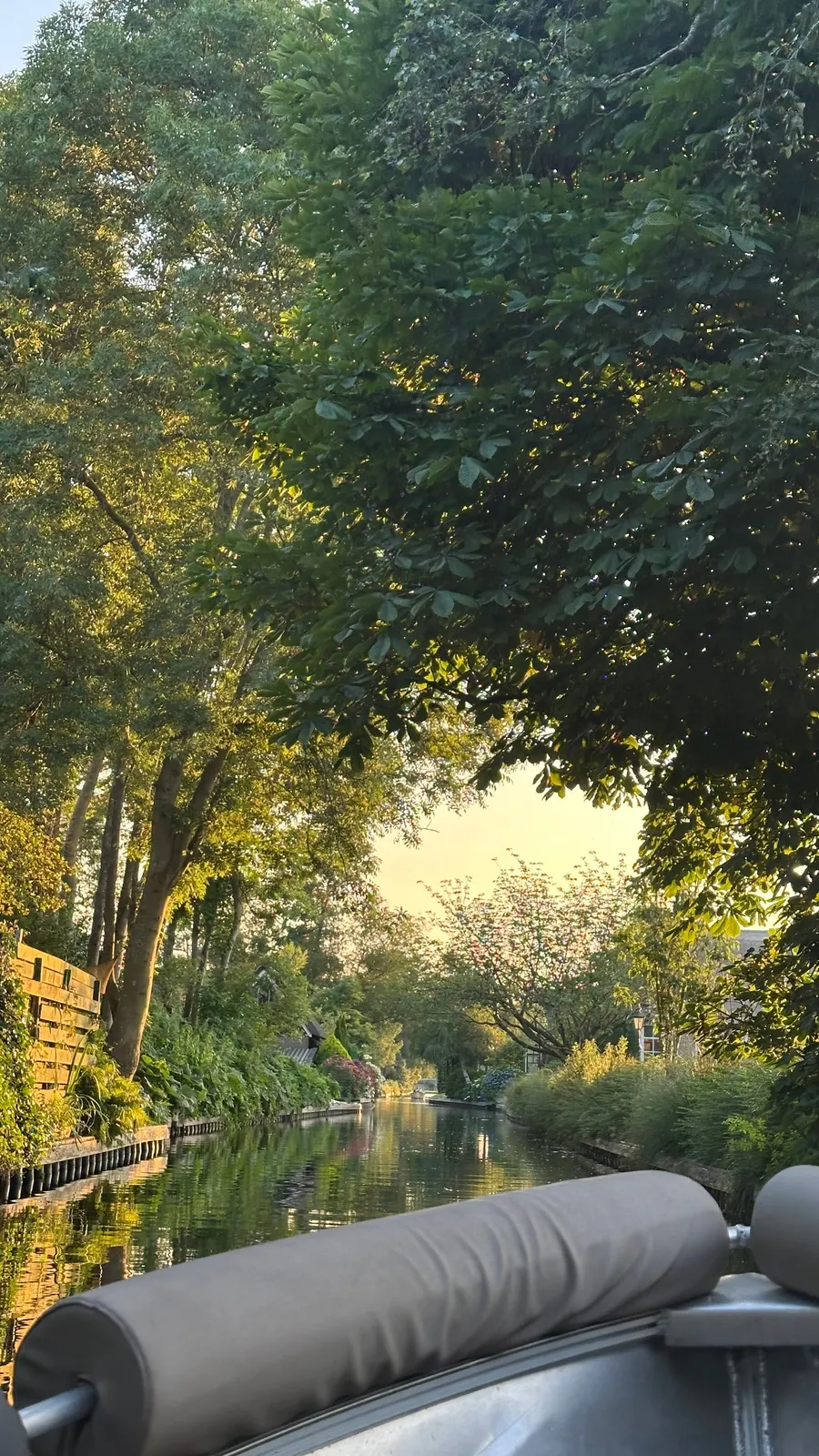
Humpback farmhouses
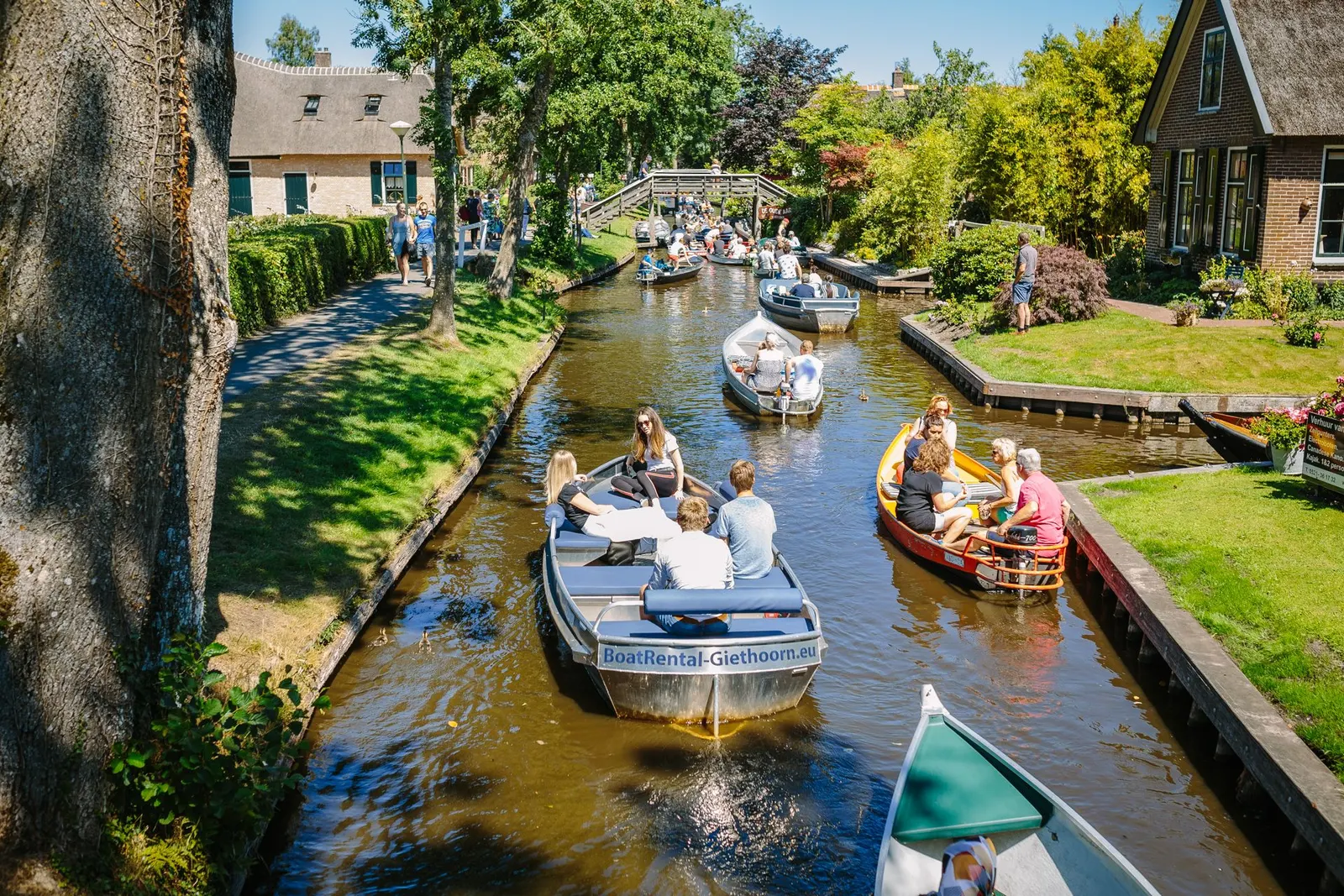
The thatched farmhouses with their tall, rounded roofs are known as “bultrugboerderijen” (humpback farms). The hay was stored under the roof, where it stayed dry in the wet landscape.
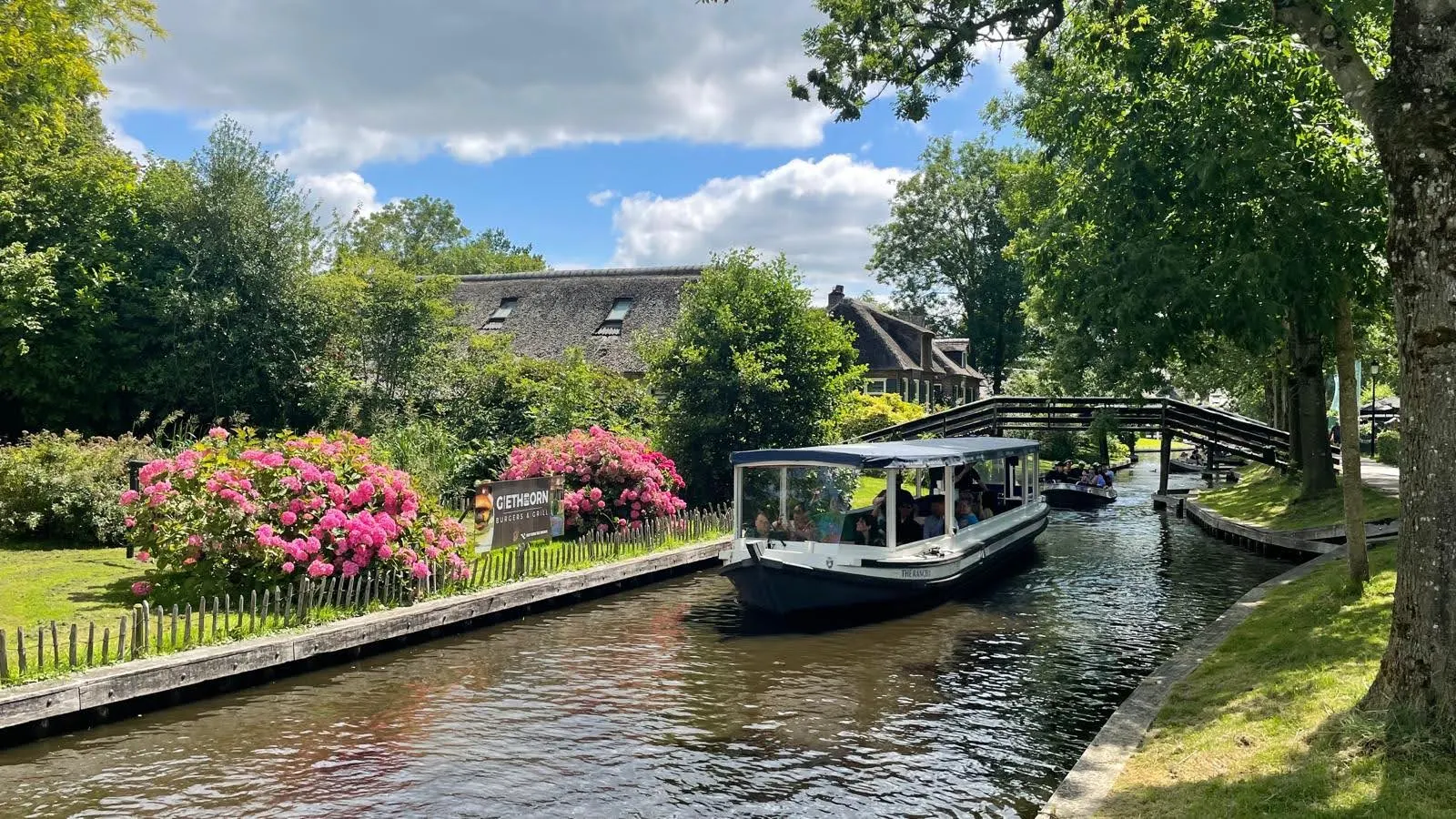
From peat diggers and goat horns to the village of bridges that draws visitors from all over the world. This is how Giethoorn came to be.
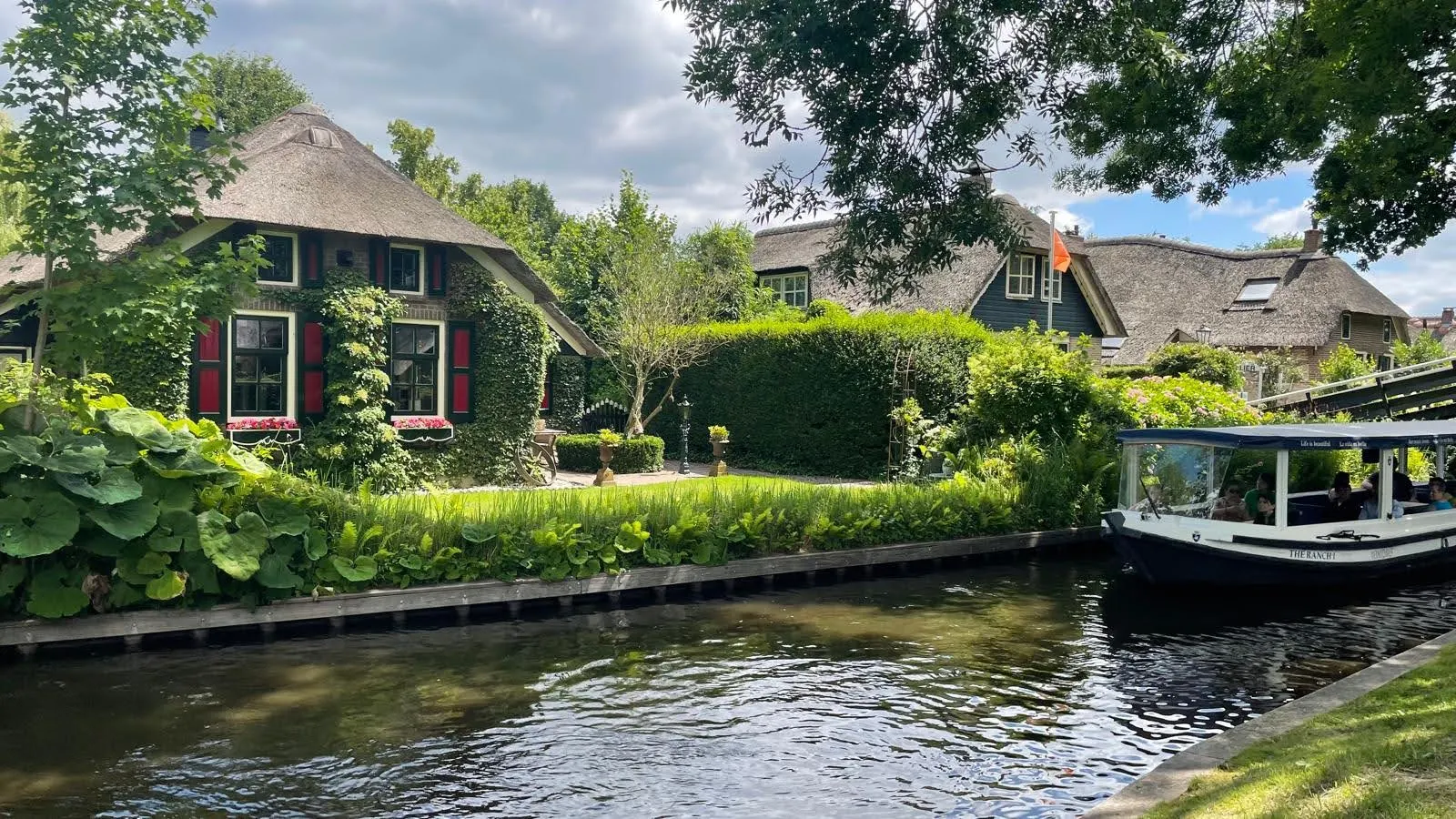
Giethoorn was settled around 1225 to 1230, when colonists moved into the peat bogs north of present-day Zwolle. They made a living from peat: the bog was dug out, dried and sold as fuel.
The digging left behind the lakes and ditches that define the village today. The peat was shipped out by boat, and so the water became the main road. It still is: many houses can only be reached over the water or by a small bridge.
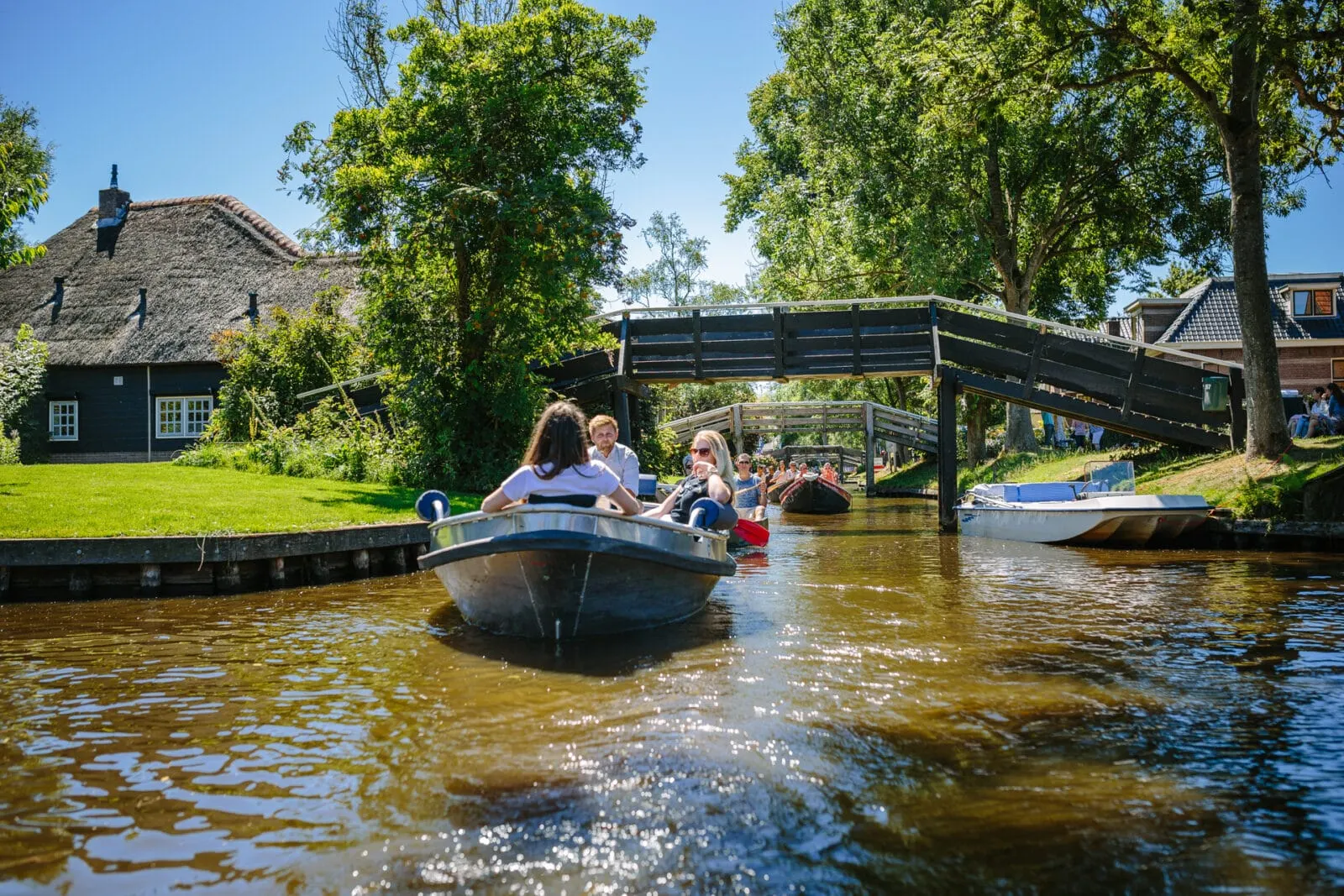
According to tradition, the first settlers found large numbers of goat horns while digging, the remains of an old flood. They named their settlement Geytenhorn, which later became Giethoorn.
By around 1750 the peat was largely exhausted and the villagers switched to cattle farming. Hay and livestock travelled by punt, the flat-bottomed wooden boat you still see here today. Reed from the surrounding marshes provided the roofs for the farmhouses.
The thatched farmhouses with their tall, rounded roofs are known as “bultrugboerderijen” (humpback farms). The hay was stored under the roof, where it stayed dry in the wet landscape.
The flat wooden boat that carried hay, cattle and people over the water. The Wildeboer punt yard at Beulakerweg 48 has been building them since 1890.
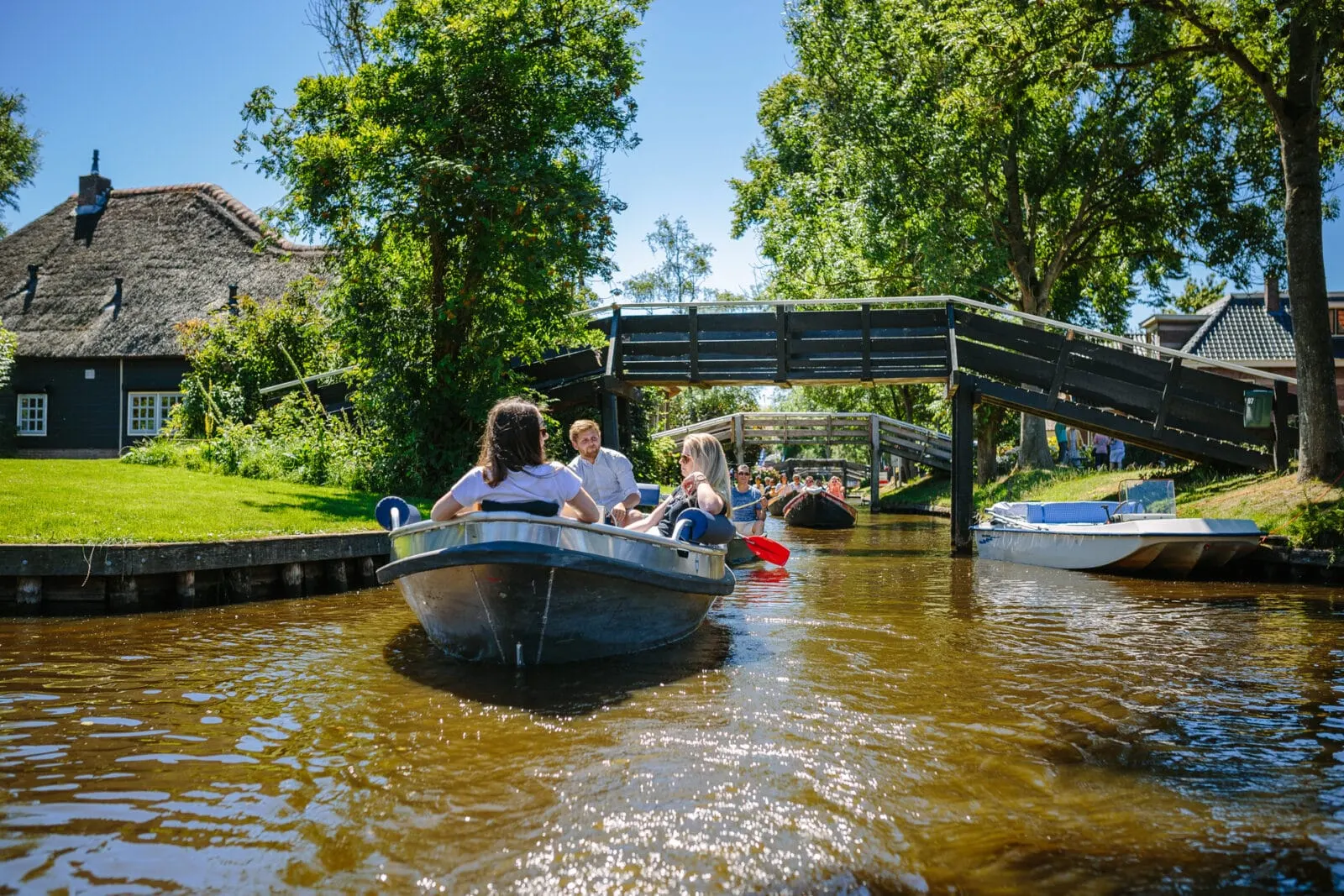
More than 176 bridges link the small islands of the village. They are high enough for a punt to pass beneath and are part of the classic Giethoorn image.
The Mennonite church on the Binnenpad, built in 1871, a national monument and the only church tower in the village. The Mennonite congregation dates back to 1551.
The Protestant church at Beulakerweg 80 is the oldest church building in the village.
Small wooden peat mills once used to move water. Three of them still stand in Giethoorn.
In 1958 the director Bert Haanstra shot the comedy Fanfare in Giethoorn. The film about two rival village brass bands became one of the most-watched Dutch films ever and put the village on the map. Anyone who knows the film will still recognise the canal, the bridges and the punts.
Since then Giethoorn has grown into one of the best-known villages in the Netherlands, with visitors from all over the world. Grand Café Fanfare at Binnenpad 68 takes its name from the film.
Museum ’t Olde Maat Uus at Binnenpad 52 is an authentic Giethoorn farmhouse with a fisherman’s cottage, boathouse, film and audio tour. Admission €7.50, children €2.50.
The village was founded around 1225 to 1230, when peat diggers settled in the bog.
After the goat horns the first settlers found while digging: Geytenhorn became Giethoorn.
Because of peat digging. Cutting out the peat left lakes and ditches behind, and the peat was carried away by boat. The water stayed the main thoroughfare ever since.
More than 176, almost all of them wooden.
Yes, about 2,865 (2023). The houses on the canal are people’s homes, so please keep off the gardens and docks.
That is the best way. Rent a boat or join the canal cruise: the farmhouses, bridges and the Zuidervermaning all line the village canal.
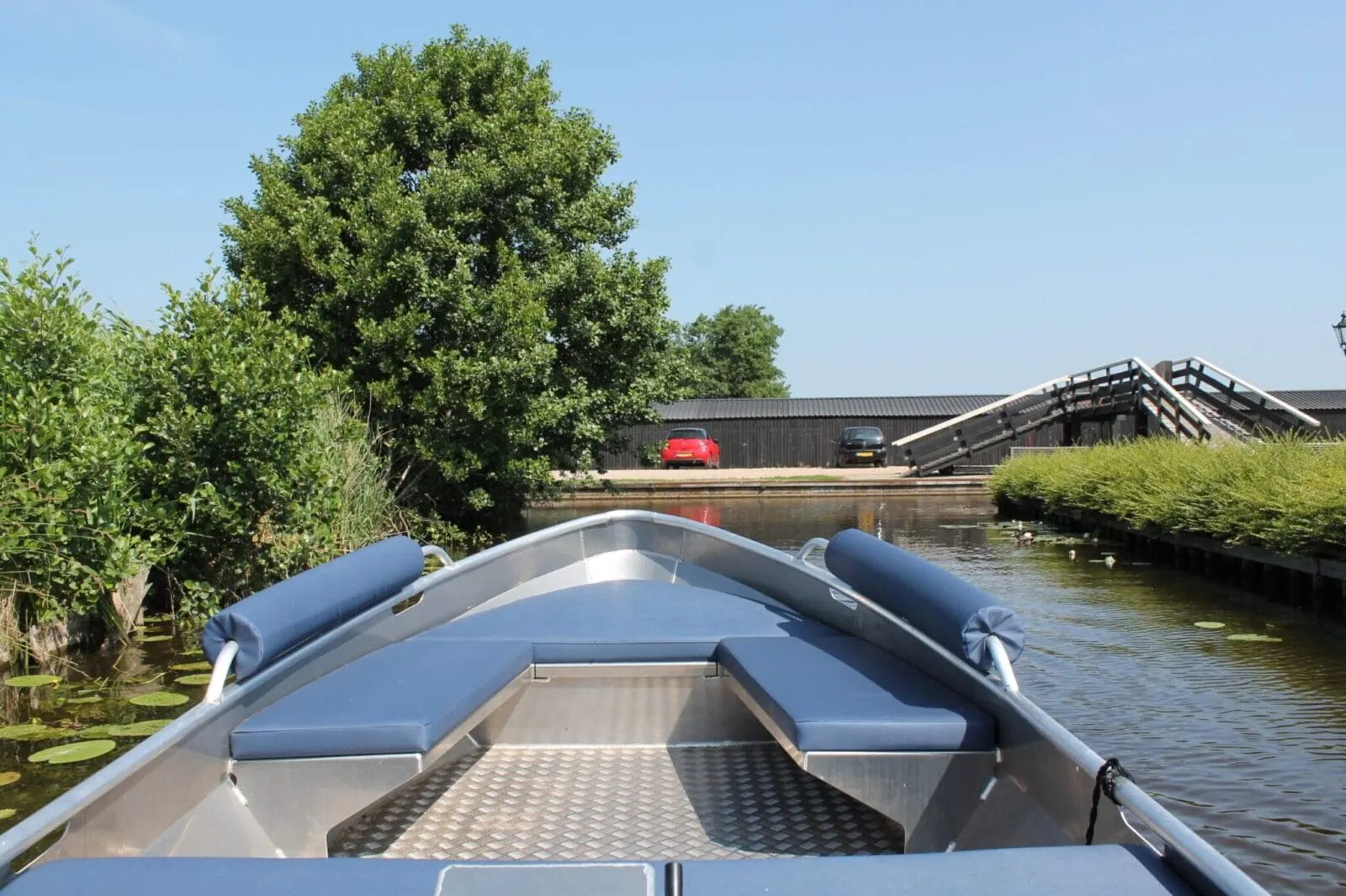
Rent a whisper boat and follow the route past the oldest farmhouses and bridges in the village.